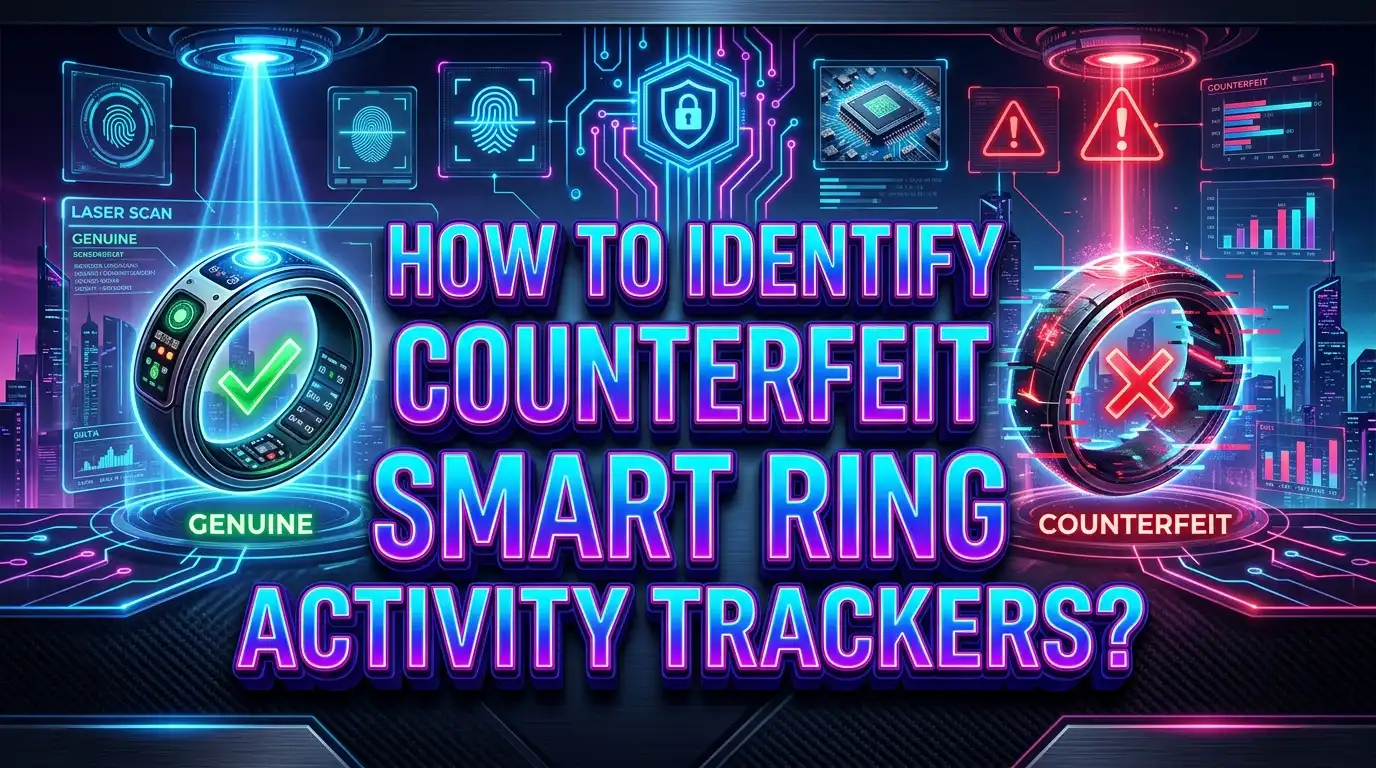
How To Identify Counterfeit Smart Ring Activity Trackers?
Smart rings have become one of the fastest growing segments in wearable technology. The global smart ring market was valued at over $400 million in 2025 and is expected to grow at a rate above 25% annually. But this explosive growth has attracted a flood of counterfeit and clone smart rings that look convincing but deliver little real value.
Dozens of fake smart ring brands pop up every month. They use slick websites, fake reviews, and misleading health claims to trick buyers into spending $100 to $300 on devices that cost manufacturers as little as $15.
So how do you tell a real, functional smart ring from a convincing fake? This guide breaks the problem down step by step. You will learn how to spot red flags in marketing, check hardware quality, verify software authenticity, and protect yourself from common scams.
In a Nutshell
- The counterfeit smart ring market is large and growing. As of mid 2025, community researchers have identified over 67 confirmed clone or counterfeit smart ring brands. These rings are typically cheap OEM hardware from Chinese manufacturers that get rebranded with new logos and sold at massive markups through flashy websites.
- Fake rings often make impossible health claims. The biggest red flag is any ring that promises to measure blood glucose levels or blood pressure without a needle or cuff. The FDA has issued a direct safety warning against trusting these claims. The required sensor technology simply does not exist in a ring form factor yet.
- Genuine smart rings come from established brands with real track records. Brands like Oura, Samsung, RingConn, and Ultrahuman have published research, received regulatory clearances, and maintain active user communities. Clone brands rarely have any of these.
- You can verify authenticity through official apps and serial numbers. Real smart rings pair only with their manufacturer’s proprietary app. If a ring works with a generic app like “Qring” or “Smart Ring” from the app store, that is a strong indicator of a white label clone.
- Always buy from official channels. Purchasing directly from the manufacturer’s website or an authorized retailer is the single most effective way to avoid counterfeits. Third party marketplaces are where most fake rings are sold.
What Are Counterfeit Smart Ring Activity Trackers
Counterfeit smart ring activity trackers are devices that imitate the look and marketing of legitimate smart rings but lack the sensor quality, software support, and accuracy to deliver reliable health data. They fall into two main categories.
The first category is direct counterfeits. These are rings sold under a fake version of an established brand name. Some sellers on third party platforms list rings that claim to be products from well known companies but are cheap imitations. They may copy the packaging, branding, and even serial number formats of the original product.
The second and more common category is the white label clone. These are rings manufactured by OEM factories in China, primarily by companies like J Style, Linktop, Colmi, and eIoT. These factories produce generic smart ring hardware. Small companies then purchase these rings in bulk, slap a new brand name on them, build a template website, and market them as innovative new products.
The problem is not just wasted money. These devices often produce fabricated health readings. Some use random number generators to display blood pressure or glucose values within a “normal” range. Users who depend on this data for health decisions could face serious consequences.
Community researchers on forums like Reddit’s r/SmartRings have compiled and maintain a growing list of over 67 confirmed clone brands. The list includes names like Vital Health Ring, Ellurify, GloRing, Pi Ring, and many others. New clones appear almost weekly.
Why the Smart Ring Market Is Flooded With Fakes
The smart ring market has become a magnet for counterfeiters because of three key factors: low manufacturing costs, high consumer demand, and easy online marketing.
A basic smart ring from an OEM factory costs between $10 and $20 to produce. These same rings are then marketed to consumers at $150 to $300 through websites that feature professional photos, slick copy, and fabricated media endorsements. The profit margins are enormous.
Consumer demand has surged thanks to mainstream attention from brands like Oura and Samsung. Many people want the benefits of a smart ring but find the $300+ price of legitimate brands expensive. This creates a perfect opening for clone sellers who offer “similar” products at lower prices.
The third factor is how easy it is to set up a convincing online storefront. Clone sellers use Shopify templates, AI generated product images, and paid social media ads to reach potential buyers. They fill their sites with hundreds of fake five star reviews and fabricated “as seen on” media logos. Many also launch crowdfunding campaigns on Kickstarter or Indiegogo, raising thousands of dollars before delivering a product that does not match the campaign promises.
The legal landscape also plays a role. Patent enforcement is expensive and slow. While Oura has pursued legal action against some competitors through the ITC and patent litigation, the sheer volume of small clone operations makes it impossible to shut them all down.
Red Flags in Marketing and Advertising
The fastest way to spot a counterfeit smart ring is to examine its marketing. Clone brands follow predictable patterns that are easy to recognize once you know what to look for.
Impossible health claims are the biggest warning sign. If a ring claims to measure blood glucose without a needle, it is fake. The FDA issued a safety communication in 2024 specifically warning consumers against trusting smartwatches or smart rings that claim to measure blood glucose levels. The technology for optical glucose monitoring has not been miniaturized to fit in any consumer wearable ring.
Similarly, any ring claiming to measure blood pressure using only green LED sensors is producing fabricated data. Green light photoplethysmography (PPG) sensors measure heart rate by detecting blood flow near the skin surface. They cannot measure arterial pressure waveforms. Rings making this claim typically generate random numbers within a plausible range.
Watch for “QVC style” pricing tactics. Clone sellers frequently display a fake original price of $399 or $499, then show a “limited time” discount of 60% or more. This creates urgency and makes the deal seem too good to pass up.
Look for vague or missing company information. Legitimate brands clearly list their headquarters, founding team, and contact details. Clone brands often hide behind generic email addresses and have no verifiable business history. Many are shell companies incorporated just weeks before their product launch.
Finally, be cautious of rings with sudden social media advertising pushes that include glowing reviews from unknown influencers. These are almost always paid promotions for clone products.
How To Check the Hardware Quality
Physical inspection of the ring itself reveals a lot about its authenticity and build quality. Genuine smart rings from established brands use high grade materials and precise manufacturing processes.
Check the material and finish. Legitimate smart rings use titanium, ceramic, or high quality coated metals. They feel solid and have a smooth, even finish. Counterfeit rings often use lighter alloys or plastic coated metals. They may feel hollow or unusually light. Some users report that fake rings turn their fingers green due to poor quality metal coatings.
Examine the sensor array. Turn the ring over and look at the inner surface. Genuine smart rings have clearly defined optical sensor windows with visible LED emitters and photodetectors. The layout should be symmetrical and precise. Clone rings may have poorly aligned sensors, visible glue residue, or scratched sensor windows.
Look at the charging mechanism. Many clone rings still use the older “circle within a circle” pogo pin magnetic charging connector. While this is becoming less of a universal indicator as some clones adopt wireless charging, it remains common among the cheapest fakes. Legitimate brands like Oura and Samsung use proprietary charging cradles or docks.
Assess the weight and dimensions. Compare the ring’s weight and dimensions against the official specifications listed on the manufacturer’s website. Counterfeits often differ by a few grams or millimeters. A ring that claims to be a specific brand but does not match the published specs is likely fake.
Check for regulatory markings. Real smart rings carry FCC, CE, or other regulatory certification marks. These should be engraved or printed clearly on the ring or its packaging. You can also search the FCC ID database online to verify whether the ID on the ring matches the claimed manufacturer.
Verify the Software and App Pairing
One of the most reliable ways to confirm a smart ring’s authenticity is through its software. Legitimate smart rings use proprietary companion apps that are tightly integrated with the hardware.
Oura rings work only with the Oura app. Samsung Galaxy Rings work with the Galaxy Wearable app. RingConn rings work with the RingConn app. If a ring claims to be from one of these brands but pairs with a generic app like “Qring,” “J Ring,” “Cyfit,” or simply “Smart Ring,” it is a clone.
White label manufacturers provide their clients with template versions of their native apps. These allow the clone brand to insert their logo and adjust the color scheme. But the underlying app structure, data display, and menu layout remain identical across dozens of different “brands.” Downloading and comparing these apps side by side makes the shared origin obvious.
Check the app’s download count and reviews in your device’s app store. Legitimate brand apps have hundreds of thousands or millions of downloads along with detailed, varied reviews. Clone ring apps tend to have few downloads, generic positive reviews, or reviews that mention the app by a different name than expected.
Also pay attention to data quality. Pair the ring and wear it for a day. Compare the heart rate readings against a known accurate device like a chest strap heart rate monitor. Fake rings often show heart rate values that remain suspiciously static or change in ways that do not correlate with your actual activity.
Understanding the OEM White Label Problem
The core of the counterfeit smart ring issue is the white label manufacturing model. A small number of factories in China produce the vast majority of clone smart rings. Companies like J Style, Linktop, Colmi, and eIoT sell their hardware to anyone willing to place a minimum order.
J Style, for example, openly advertises OEM and ODM services on platforms like Alibaba. They offer two main models that appear in dozens of different branded products. The J Style JC 2301A and the JC 2301B are the hardware behind many rings that claim to be unique products. The newer X1A01 model is starting to replace the 2301A in some brands.
The white label process works like this. A company orders a batch of rings from the factory. The factory etches the company’s logo onto the rings and prints custom packaging. The company then builds a marketing website and begins selling. The total investment is low, often just a few thousand dollars.
This is why so many clone rings share identical features, sensor layouts, and even app interfaces. The hardware is the same. Only the branding changes. Community researchers have confirmed this by comparing teardown photos, FCC filings, and app code across multiple supposedly independent brands.
The Circular Ring 2, once marketed as a European innovation, was confirmed in early 2025 to be a white labeled Linktop Cardio Ring. Analysis of PCB layouts, sensor placement, and FCC filings proved the connection. This revelation damaged trust in the Circular brand significantly.
Understanding this system helps you see through the marketing. If a brand new smart ring company appears overnight with a polished website but no verifiable history of hardware development, it is almost certainly selling white label OEM hardware at a steep markup.
How To Research a Smart Ring Brand Before Buying
Before spending money on any smart ring, invest 15 minutes in basic research. A few simple checks can save you from buying a counterfeit or clone product.
Search the brand name along with words like “clone,” “scam,” or “review” on Reddit. The r/SmartRings community actively investigates new brands and maintains a list of confirmed clones. If the ring you are considering appears on that list, do not buy it.
Check when the company was incorporated. Many clone brands register their business entity just weeks before launching their product. You can search company registration databases for the US, UK, or other countries to find this information. A smart ring company that was incorporated three months ago and already claims thousands of satisfied customers is almost certainly fake.
Look for independent, detailed reviews from established tech publications. Legitimate smart rings get reviewed by outlets like WIRED, ZDNet, The Verge, and similar publications. Clone rings rely on paid influencer posts and fabricated media endorsements. If the only reviews you can find are from unknown YouTube channels or blog posts that read like advertisements, proceed with caution.
Verify any claimed certifications. Real smart rings undergo testing for electromagnetic compatibility, safety, and wireless communications standards. They receive FCC IDs in the US and CE marks in Europe. You can search the FCC database at fcc.gov to verify whether a ring’s claimed FCC ID is valid and matches the stated manufacturer.
Check the crowdfunding history. If the ring launched through Kickstarter or Indiegogo, read the comments section carefully. Dissatisfied backers often post warnings about delays, false promises, and products that do not match the campaign descriptions.
The Danger of Fake Health Claims
Counterfeit smart rings do not just waste your money. They can actively harm your health if you trust their readings for medical decisions.
The most dangerous fake claim is blood glucose monitoring. The FDA has explicitly warned that no smartwatch or smart ring has been authorized to measure blood glucose levels without piercing the skin. Devices that claim this feature use algorithms that generate numbers within a plausible range. They do not actually measure anything.
For people with diabetes, trusting a fake glucose reading could lead to incorrect insulin dosing, undetected hypoglycemia, or undetected hyperglycemia. Any of these situations can be life threatening. The FDA’s safety communication makes clear that these unauthorized devices pose a genuine patient safety risk.
Fake blood pressure readings carry similar dangers. People with hypertension who rely on inaccurate readings might skip medication or fail to seek medical attention during a dangerous blood pressure event.
Even basic metrics like heart rate and sleep tracking suffer on clone hardware. Legitimate smart rings achieve heart rate correlation coefficients above 0.99 compared to medical grade devices. Clone rings with poorly calibrated sensors can produce readings that are off by 10 to 30 beats per minute. Sleep tracking on these devices may record sleep stages that have no connection to your actual sleep patterns.
The core principle is simple. Never use any smart ring as a substitute for medical devices or professional medical advice. This applies even to legitimate brands. But the risk is dramatically higher with counterfeit products that fabricate their readings entirely.
Where To Buy Smart Rings Safely
Your choice of purchase channel is one of the most important decisions in avoiding counterfeit smart rings. The safest approach is to buy directly from the manufacturer’s official website.
Oura sells its rings through ouraring.com. Samsung sells the Galaxy Ring through samsung.com and its own retail stores. RingConn sells through ringconn.com. Ultrahuman sells through ultrahuman.com. These direct purchases come with manufacturer warranties, guaranteed authentic products, and proper customer support.
Authorized retailers are the next safest option. Major electronics retailers that have formal partnerships with smart ring brands carry authentic products. Always verify the retailer’s authorized status on the manufacturer’s website before purchasing.
Third party marketplaces are where the greatest risk exists. Listings on general marketplaces often mix legitimate products with counterfeits. Some sellers purchase used or damaged rings, repackage them, and sell them as new. Others sell outright fakes.
If you must buy from a third party marketplace, verify the seller’s history and ratings carefully. Look for sellers with long track records and hundreds of verified reviews. Be skeptical of newly created seller accounts offering popular smart rings at below market prices.
Avoid social media ads for unknown smart ring brands entirely. The paid advertising ecosystem on platforms like Facebook, Instagram, and TikTok is the primary distribution channel for clone smart rings. These ads often feature professional looking videos, celebrity endorsements that may be fabricated, and links to convincing but fraudulent websites.
If a deal looks too good to be true, it is. Legitimate smart rings cost what they cost because they contain real sensors, quality materials, and years of software development.
How To Spot a Clone on Crowdfunding Platforms
Crowdfunding platforms like Kickstarter and Indiegogo have become popular launch pads for counterfeit smart ring campaigns. These campaigns raise tens or even hundreds of thousands of dollars before delivering products that do not match their promises.
Look for these specific warning signs. First, check whether the campaign uses digital renders or AI generated images instead of photos of a real, working prototype. Kickstarter’s own rules require creators to show prototypes, but enforcement is inconsistent. A campaign that only shows polished 3D renders likely does not have a working product.
Second, examine the claimed features against what is technically possible. If the campaign promises blood glucose monitoring, continuous blood pressure tracking, or ECG quality readings from a ring, these claims are almost certainly false for any ring priced under $300 from an unknown brand.
Third, check the campaign creator’s history. Click on the creator’s profile and see if they have run previous campaigns. Look at whether those campaigns delivered successfully. A creator with no history who suddenly appears with a “groundbreaking” smart ring is a high risk investment.
Fourth, read the comments section. Savvy backers often identify clones within hours of a campaign launch. They compare the ring’s design to known OEM products and share their findings in the comments. Community members from r/SmartRings actively monitor new campaigns and flag suspicious ones.
Fifth, search for the ring’s design on Alibaba or similar wholesale platforms. If you can find an identical looking ring sold in bulk for $15 per unit, the crowdfunding campaign is almost certainly selling a rebranded OEM product. Both Kickstarter and Indiegogo prohibit reselling existing products as original inventions, but they lack the staff to catch every violation.
What To Do if You Already Bought a Fake
If you have already purchased a smart ring and suspect it is counterfeit, take action quickly. Time limits on refunds and chargebacks are strict, so do not delay.
Request a refund from the seller. Many clone sellers offer 30 day return windows. Contact their customer support through email or their website’s chat function. Document everything with screenshots. Be clear that the product does not match the advertised specifications.
If the seller refuses the refund or stops responding, file a dispute with your payment provider. Credit card companies and PayPal both offer buyer protection programs. Explain that the product was misrepresented and provide evidence such as comparison photos, screenshots of false advertising claims, and links to community discussions identifying the product as a clone.
Report the seller to the platform where you bought the ring. If you purchased through a third party marketplace, file a complaint with the marketplace. If you backed a crowdfunding campaign, report the campaign for violating platform rules regarding misleading claims and resale of existing products.
Stop relying on the ring’s health data immediately. Even if you decide to keep the ring as a curiosity, do not make any health decisions based on its readings. The data it produces is unreliable at best and completely fabricated at worst.
Share your experience with the community. Post your findings on Reddit, in smart ring discussion groups, or in review sections. Your experience helps other buyers avoid the same mistake. Community maintained clone lists depend on reports from real buyers to stay current and accurate.
How To Protect Yourself Going Forward
Avoiding counterfeit smart rings requires a consistent set of habits. Build these practices into your buying routine and you will significantly reduce your risk.
Stick to established brands with verifiable track records. As of 2025 and into 2026, the most trusted smart ring brands include Oura, Samsung, RingConn, and Ultrahuman. These companies have published peer reviewed research, received regulatory clearances, and maintain transparent operations.
Set a realistic budget. Quality smart rings cost between $200 and $400. If a ring from an unknown brand offers the same features as these established products at half the price, that discount likely comes from cutting corners on sensor quality, data accuracy, and materials.
Stay connected to the smart ring community. Follow r/SmartRings on Reddit and other wearable technology forums. These communities actively track new products, identify clones, and share teardown analyses. They are your best early warning system against new scams.
Be skeptical of all social media advertising for smart rings. The algorithms that serve you ads do not verify product quality. A professional looking ad tells you nothing about the product behind it. Always research independently before clicking “buy.”
Check the FDA’s safety communications page periodically. The FDA updates its warnings about unauthorized health devices regularly. If a ring or its manufacturer appears in an FDA warning, avoid it completely.
Verify before you buy, every time. Even if a friend recommends a ring, run through the checks described in this guide. Search for the brand name with “clone” or “scam.” Check the company’s registration date. Look for independent reviews. Verify the FCC ID. These steps take minutes and can save you hundreds of dollars.
Frequently Asked Questions
How can I tell if my smart ring is a counterfeit?
Check whether the ring pairs with the manufacturer’s official proprietary app. If it connects to a generic app like “Qring,” “J Ring,” or “Smart Ring,” it is likely a white label clone. Also compare the ring’s weight, dimensions, and material quality against the official specifications published on the manufacturer’s website. Regulatory markings like FCC IDs can be verified through the FCC’s online database.
Are cheap smart rings from social media ads always fake?
Not every inexpensive smart ring is a counterfeit, but most smart rings advertised through social media from unknown brands are white label OEM clones. These rings are manufactured by a handful of Chinese factories and rebranded by dozens of small companies. The advertising typically includes fabricated reviews, false media endorsements, and impossible health claims.
Can a fake smart ring harm my health?
Yes. Fake smart rings that claim to measure blood glucose or blood pressure produce fabricated data. The FDA has warned against using any smartwatch or smart ring for blood glucose measurement. Relying on inaccurate health readings can lead to missed medical events, incorrect medication dosing, and false reassurance about serious health conditions.
What should I do if I discover my smart ring is a clone?
Request a refund from the seller immediately. If the seller does not respond, file a dispute with your credit card company or payment provider. Report the product to the platform where you purchased it. Stop relying on any health data from the device, and share your experience in online communities to warn other buyers.
Where is the safest place to buy a smart ring?
The safest place is the manufacturer’s official website. Authorized retail partners verified on the manufacturer’s site are also reliable. Avoid purchasing smart rings from unknown sellers on third party marketplaces or through social media advertisements, as these channels carry the highest risk of counterfeit products.
How many counterfeit smart ring brands have been identified?
Community researchers have identified over 67 confirmed counterfeit or clone smart ring brands as of mid 2025. The number continues to grow as new brands appear regularly. The r/SmartRings community on Reddit maintains an updated list of these confirmed clones with evidence and sourcing for each entry.

I’m a tech enthusiast who loves breaking down gadgets, apps, and tools into simple, honest reviews. At GenResizeHub, I help you make smarter buying decisions through in-depth comparisons and easy-to-follow guides. Got a question? Drop me a mail!